
Dante and Beatrice – the beginning of Paradise
A golden miniature from the Paris Dante codex linked to Izola depicts a scene from the beginning of Paradiso, Dante's Comedy, in which the poet meets Beatrice.
As part of the cross-border literary route, Izola connects Dante’s heritage with the city’s written culture, history and cultural memory. Its most important documented connection with Dante is represented by two manuscripts of the Commedia, copied in Izola at the end of the 14th century by Pietro Campenni, chancellor to the Podestà of Izola.
In addition to the story of the manuscripts, the Paradiso Literary Park also reveals other layers of Izola’s heritage: the Podestà’s Palace, the local tradition surrounding Dante’s visit, Glagolitic inscriptions from Korte, and the Kašlerski gonič. These elements are not connected to Dante in the same way, but together they tell the long story of written culture, cultural memory and creativity in this area.
The Podestà’s Palace and the Written Culture of the City
The Podestà’s Palace, first mentioned in 1253, was associated with the city administration for centuries. Since Pietro Campenni served as chancellor to the Podestà of Izola, the palace represents the institutional setting of the city administration in which he worked; however, there is no evidence that the two manuscripts were actually copied in this building. A postcard sent in 1912 and the Venetian lion on the façade also bear witness to the changes the palace underwent and to the long period of Venetian rule in Izola.
Between History and Tradition
According to an inscription on an old postcard, Dante is said to have spent the night at Casa Delise in October 1308. The story also connects the Ughi family, whom Dante mentions in Canto XVI of the Paradiso, with the Izola-based Besenghi degli Ughi family. Since Dante’s visit has not been historically confirmed and the direct family connection has not been documented, both elements should be understood as part of local tradition and subsequent cultural memory.
From Glagolitic Inscriptions to the Kašlerski Gonič
The rich cultural history of the Izola area is also reflected in the Glagolitic monuments from Korte and the Kašlerski gonič, a small bronze dog figurine dating from the 6th–5th century BC, discovered at Kaštelir above Korte. They are not directly connected with Dante, but they complement the presentation of the different periods and cultural influences that have shaped Izola and its hinterland.
The Legend of the White Dove of Izola
The legend of Izola’s white dove is one of the city’s best-known stories and an important part of its identity. Its story dates back to 23 October 1380, when a Genoese fleet arrived off the coast of Izola. Would you like to learn more about this legend? Read more here.
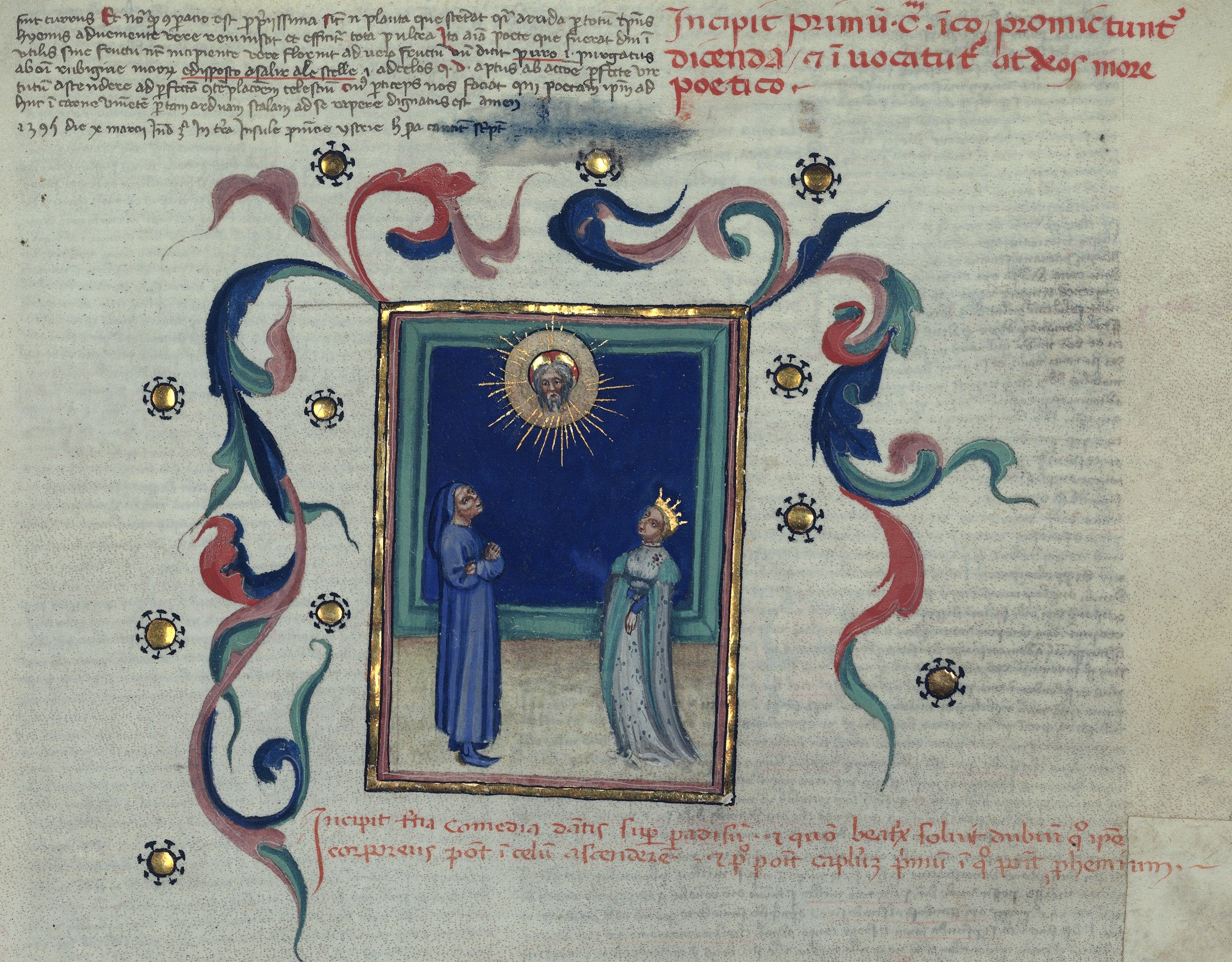
A golden miniature from the Paris Dante codex linked to Izola depicts a scene from the beginning of Paradiso, Dante's Comedy, in which the poet meets Beatrice.
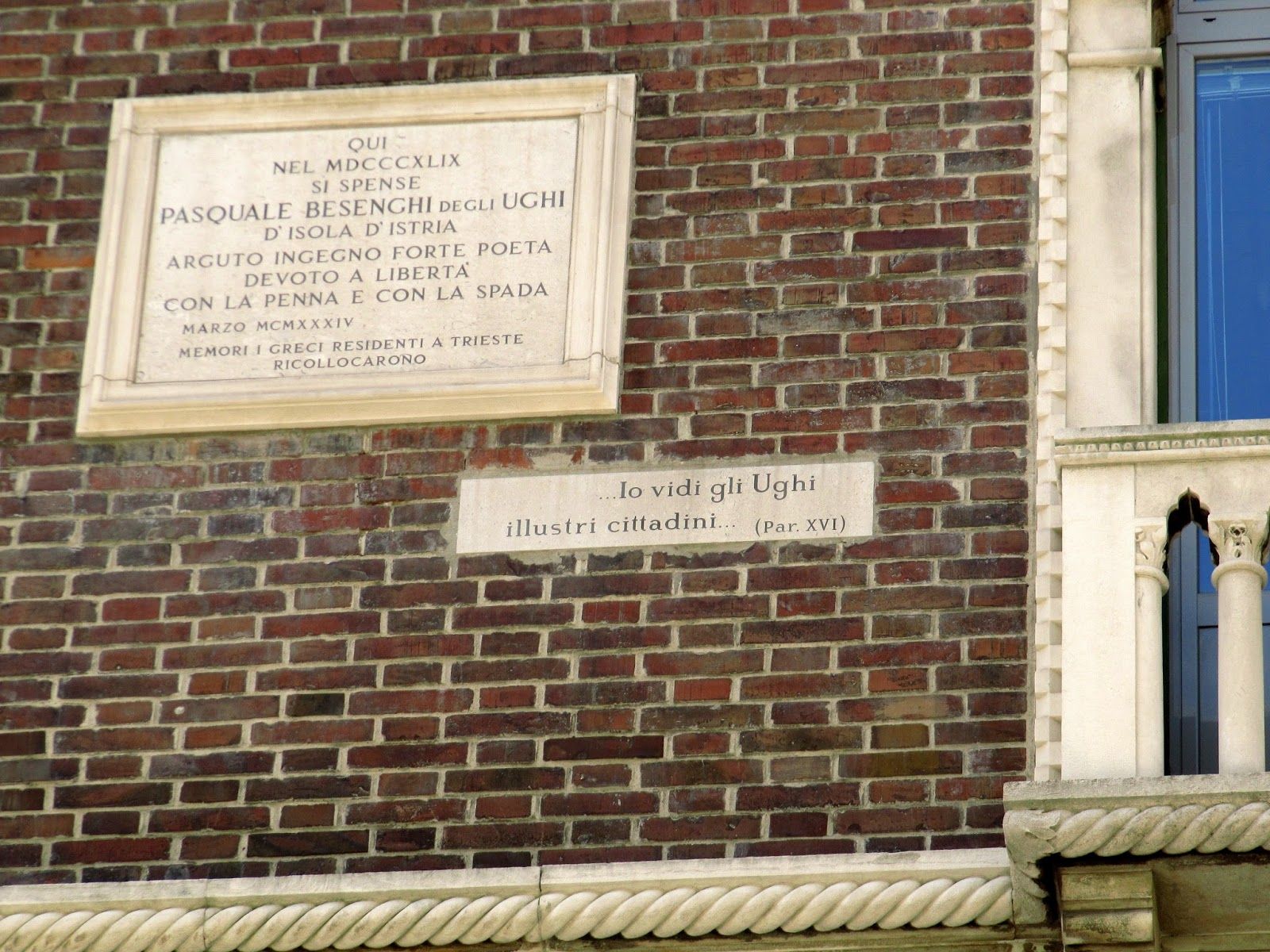
In Trieste, a commemorative plaque bears a verse from Dante’s Paradiso referring to the Ughi family. Dante’s ancestor, Cacciaguida, mentions the Ughi when recalling the noble Florentine families that had already begun to lose their prestige during his lifetime.
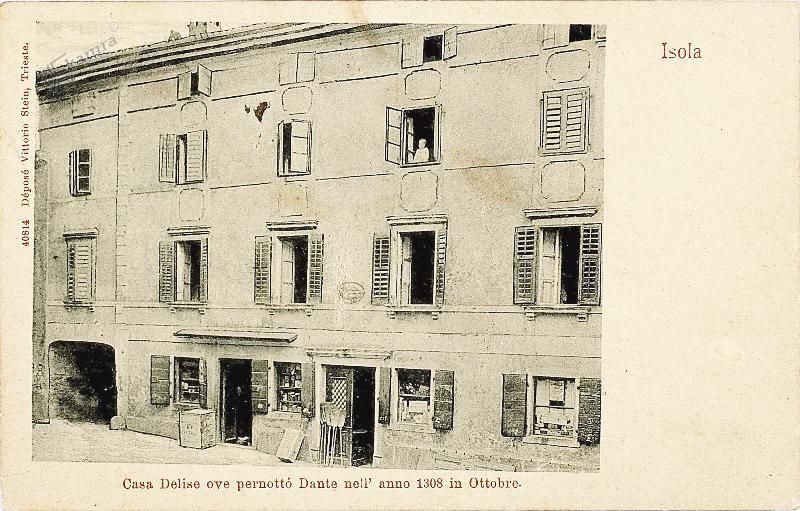
A postcard from the beginning of the last century depicts a building in Izola’s Piazza Grande, known as Casa Delise, the former town hall. According to the inscription on the postcard, Dante Alighieri is said to have spent the night there in October 1308.
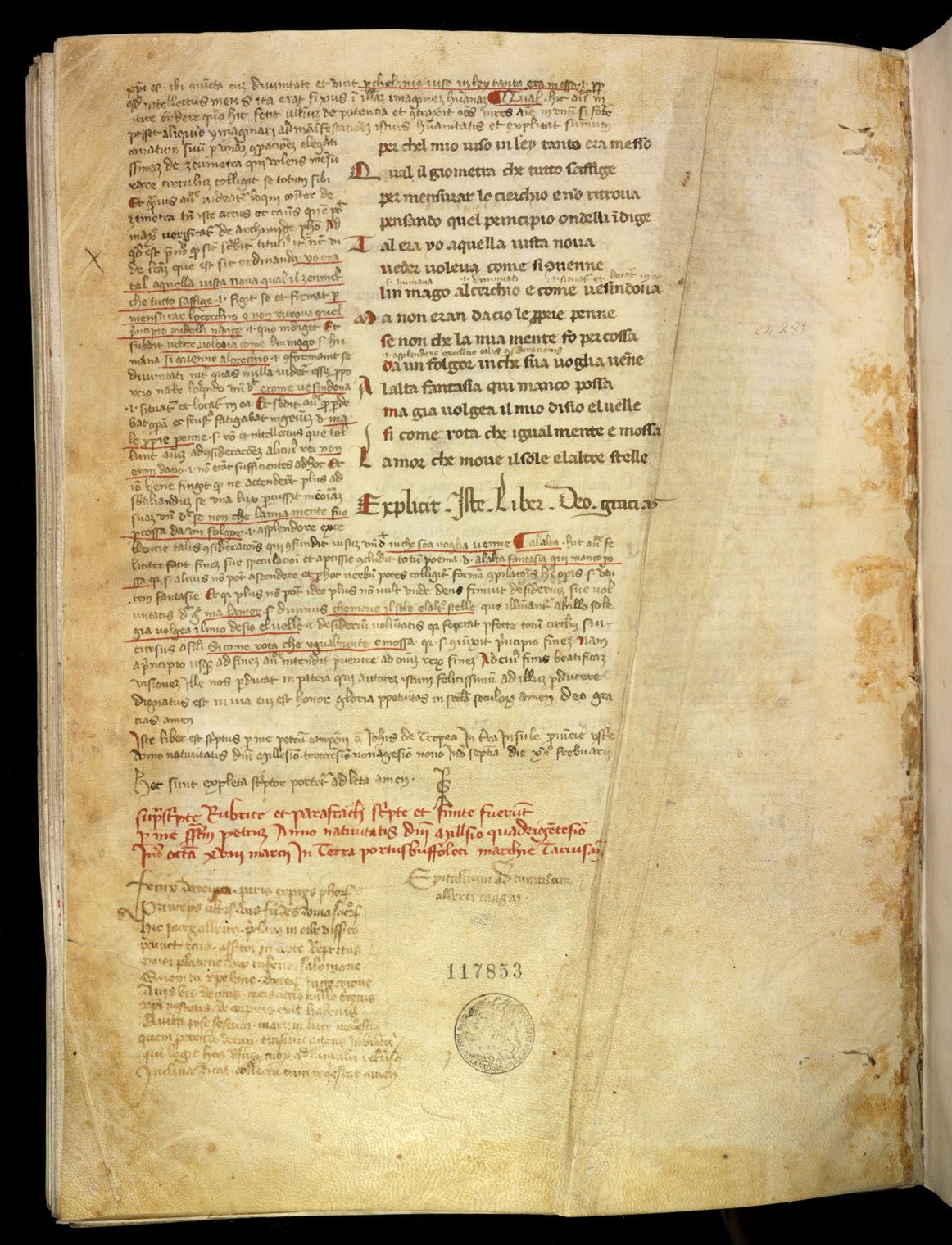
A detail from Dante’s Venetian Commedia manuscript bearing the signature (monogram) of Pietro Campenni da Tropea, who was the chancellor to the Podestà of Izola at the time and who copied, illustrated and annotated the manuscript in Izola around 1395, in the Podestà’s Palace.