

Dante Alighieri – fresco by Andrea del Castagno
Depiction of Dante Alighieri in the fresco by Andrea del Castagno from the cycle Famous Men and Women (1448–1451). The fresco is now part of the collection of the Uffizi Gallery in Florence.
How Dante’s Commedia left a tangible trace in Izola through Pietro Campenni.
The strongest connection between Dante and Izola is not the legend of his visit, but two copies of the Commedia that were produced in Izola at the end of the 14th century. They were prepared by Pietro Campenni of Tropea, chancellor, or scribe, to the Podestà of Izola.
The manuscripts are not Dante’s originals, but later copies of his work accompanied by the commentary of Benvenuto da Imola. In the Venetian manuscript, the transcription of the Commedia was completed in Izola, while the commentary and part of the final decoration were added later in Portobuffolé. The manuscripts bear witness to the spread and reception of Dante’s work beyond central Italy at the end of the 14th century, as well as to the cultural and intellectual space of the northern Adriatic.
Pietro Campenni – Chancellor and Scribe
Pietro Campenni came from Tropea in Calabria and worked in Izola as chancellor to the city’s Podestà. The colophon of the Venetian manuscript mentions Pietro Campenni and Izola, directly confirming that the transcription of Dante’s text was completed in Izola. Through his work, he preserved Dante’s text and passed it on to new readers and future generations.
Two Manuscripts, Two Present-Day Homes
One of the Izola manuscripts is now preserved at the Bibliothèque nationale de France (BnF) in Paris, while the other is held at the Biblioteca Nazionale Marciana in Venice. Together, they provide valuable evidence of the early reception of Dante’s work and the cultural connections between Istria, the Venetian territories and the wider European space.
An Initial from Paradiso
The decorated initial D opens Canto IX of Paradiso with the verse “Da poi che Carlo tuo, bella Clemenza …”. It is part of the Venetian Izola manuscript, now held at the Biblioteca Nazionale Marciana, and offers visitors a direct glimpse into the artistic and written culture of the period in which Campenni copied Dante’s work.
If you would like to learn more about the connection to the two manuscripts or what happened to Pietro Campenni after he left Izola, ask DANTE AI
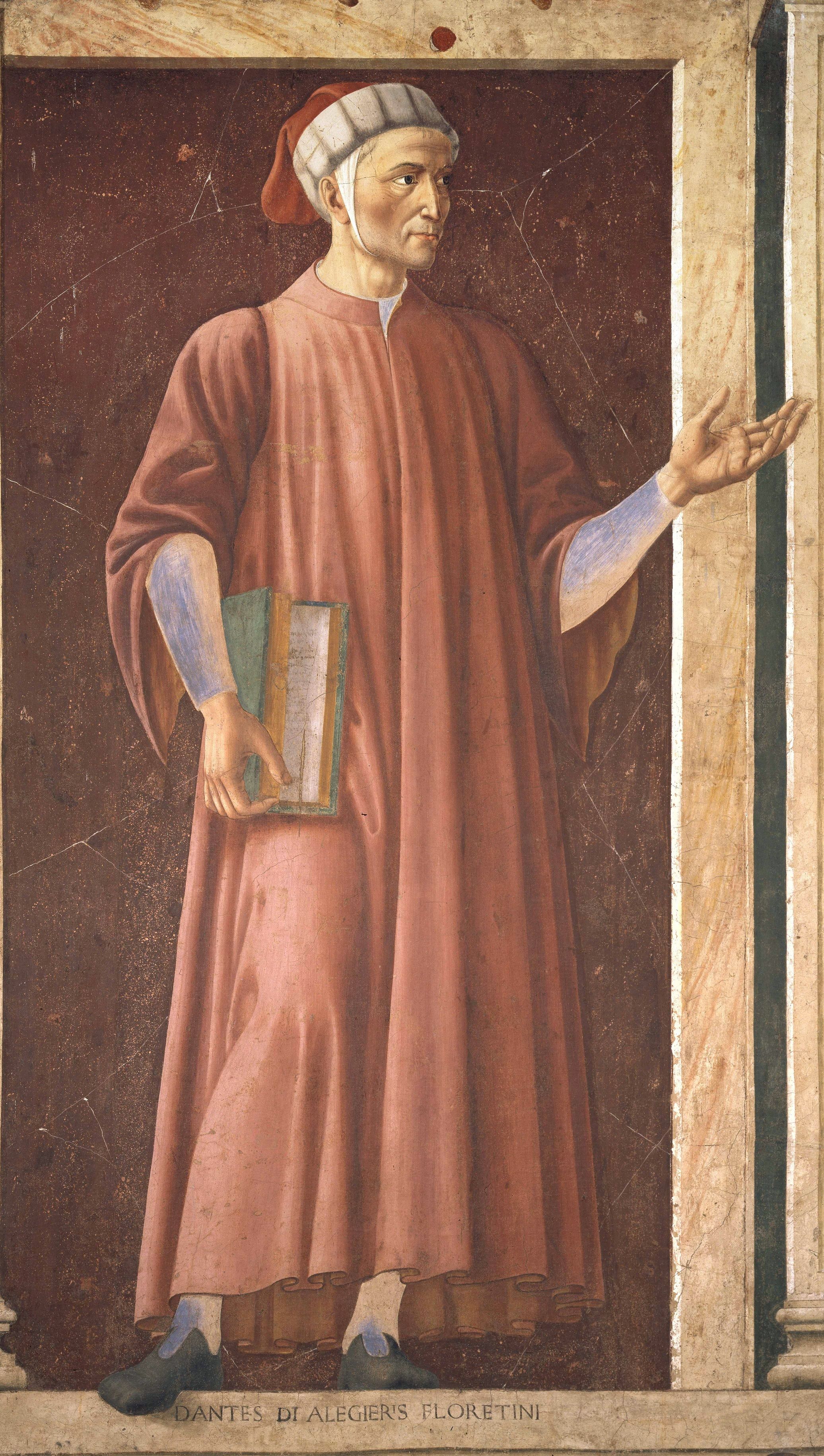
Depiction of Dante Alighieri in the fresco by Andrea del Castagno from the cycle Famous Men and Women (1448–1451). The fresco is now part of the collection of the Uffizi Gallery in Florence.
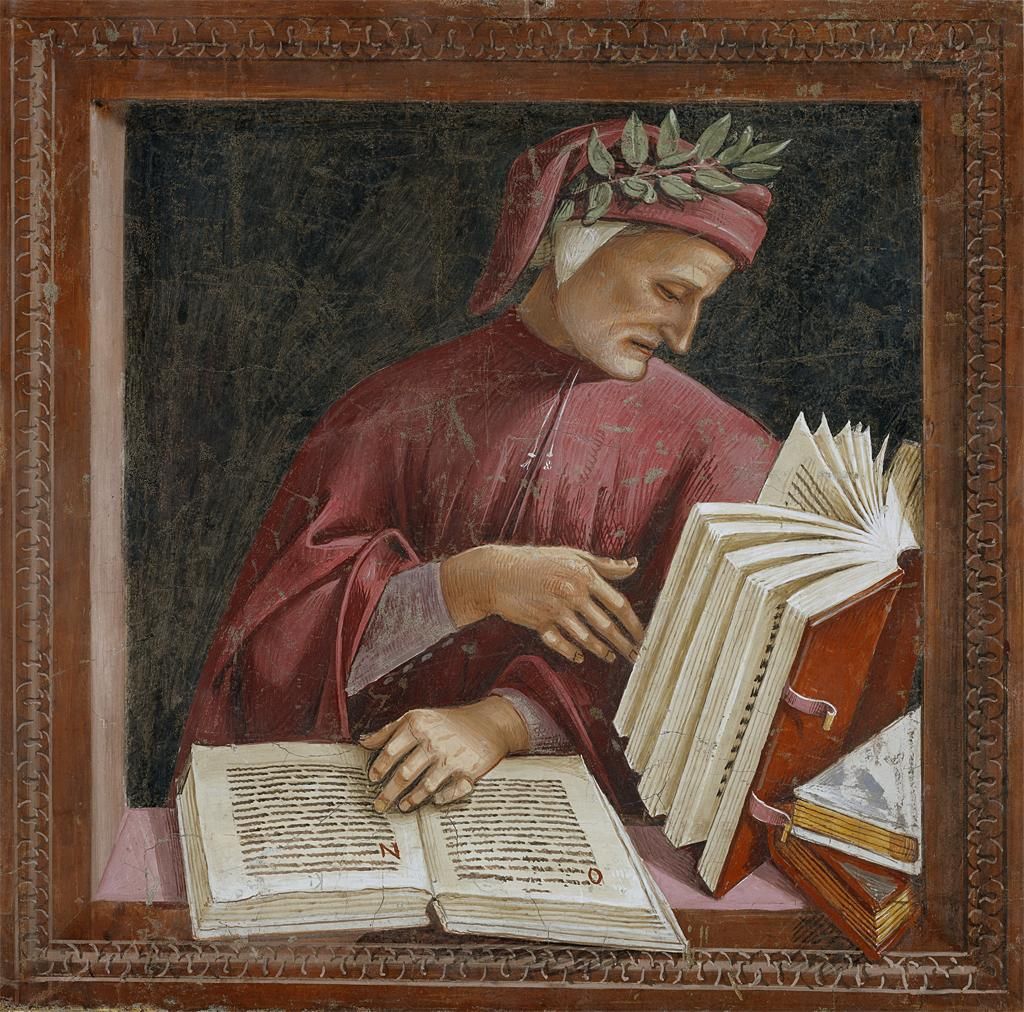
Portrait of Dante Alighieri, detail of the fresco by Luca Signorelli (1450–1523) in the Chapel of St. Brizio in Orvieto, Luca Signorelli (1450–1523).
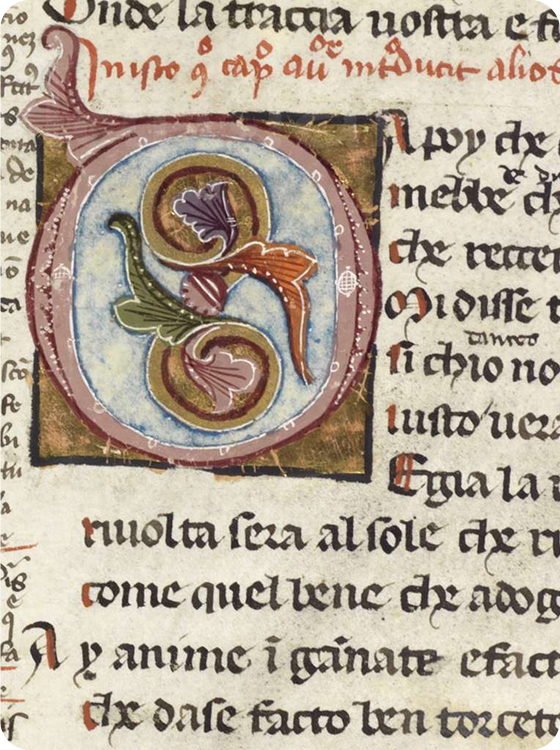
The scene directly follows the famous passage from the preceding canto (Paradise. VIII, vv. 133–135) on the relationship between nature (heredity) and divine providence, in which the interlocutor Carlo Martello explains that "begotten nature would always follow in the path of its begetters, if divine providence did not prevail." Manuscript of the so-called Venetian Izola codex (chancellor Campenni), late 14th century; parchment, ink and colored washes. Biblioteca Nazionale Marciana, Venice.
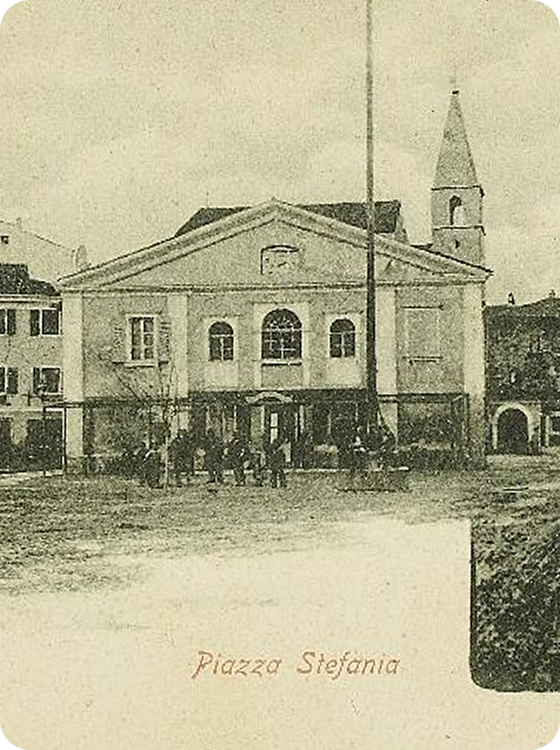
The postcard was sent; the handwritten date is 6.9.1912. The postcard shows Piazza Stefania, the square by the harbor, where fishing boats are moored. On the left are two young boys, with people and a few trees on the square. Inscription on the back: Korrespondenz Karte and Cartolina postale.
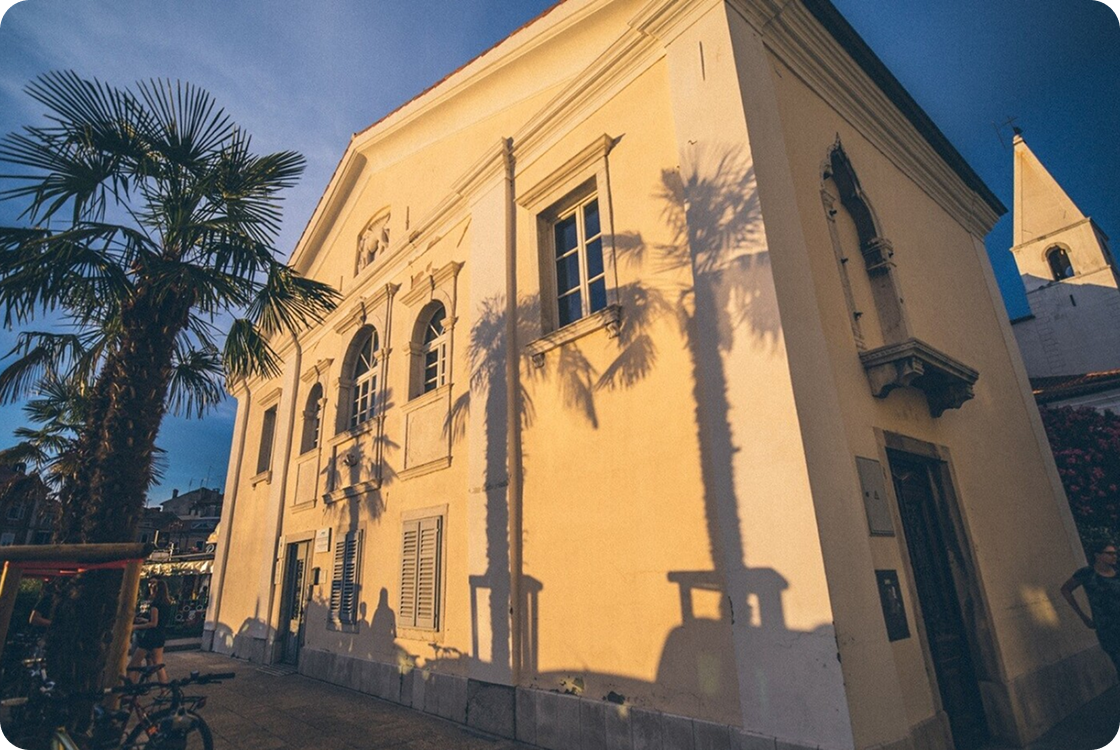
The Podestà's Palace in Izola, the former seat of Venetian authority is an important historic building with a baroque façade adorned with the symbol of the Venetian lion with an open book. Following a recent renovation, the palace now houses the Dante Copiosus installation and is the central point for themed tours on Venetian heritage. More information on its history and visits is available at Visit Izola.
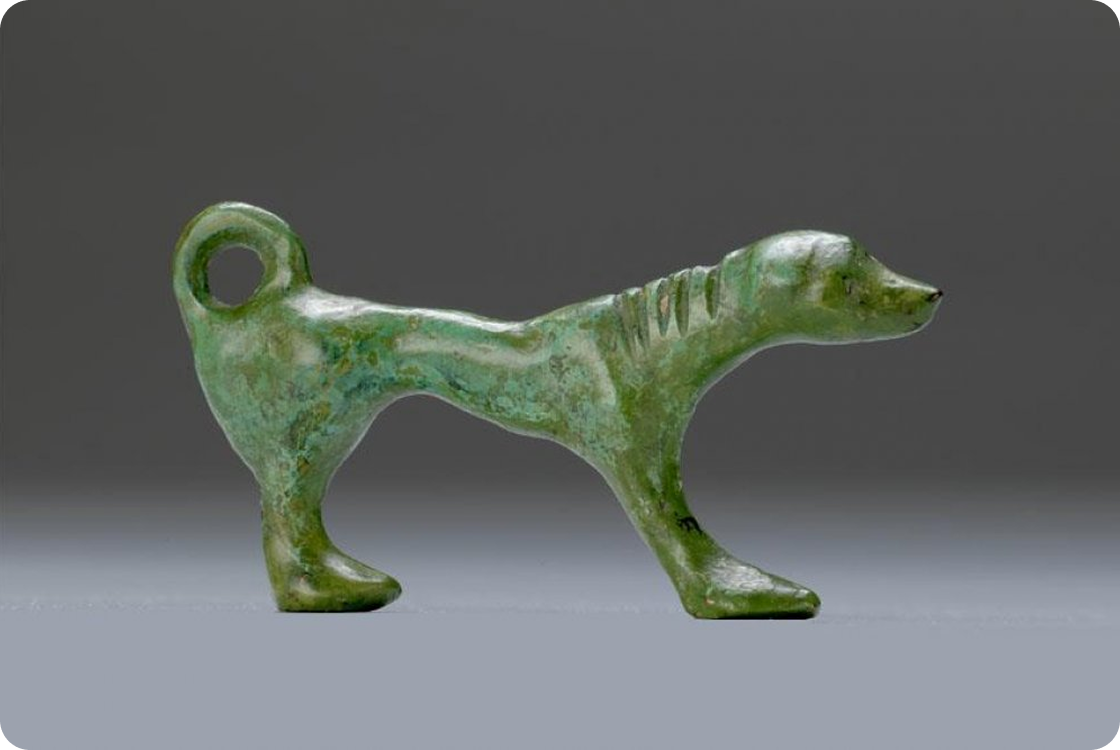
The bronze statuette of the Kašler Hound, discovered at the hillfort above Korte, dates back to the 4th–3rd century BC and is one of the most important archaeological finds in the hinterland of Izola. It bears witness to the area’s millennia-long settlement and its connections with the wider Mediterranean world.
Today, the Kašler Hound is a symbol of the cultural heritage of Izola’s countryside and its millennia-old history. This story is complemented by Glagolitic monuments and the work of the Izola scriptorium, which contributed to the development of Slavic literary culture in the northern Adriatic.
From prehistory, through the Middle Ages to the present day, the Kašler Hound represents the memory, creativity and cultural connections of this area – values that are also part of the broader story of the DANTE project.