SCAN THE QR CODE AND ASK ME ANYTHING YOU WANT

Dante as an exile and traveler

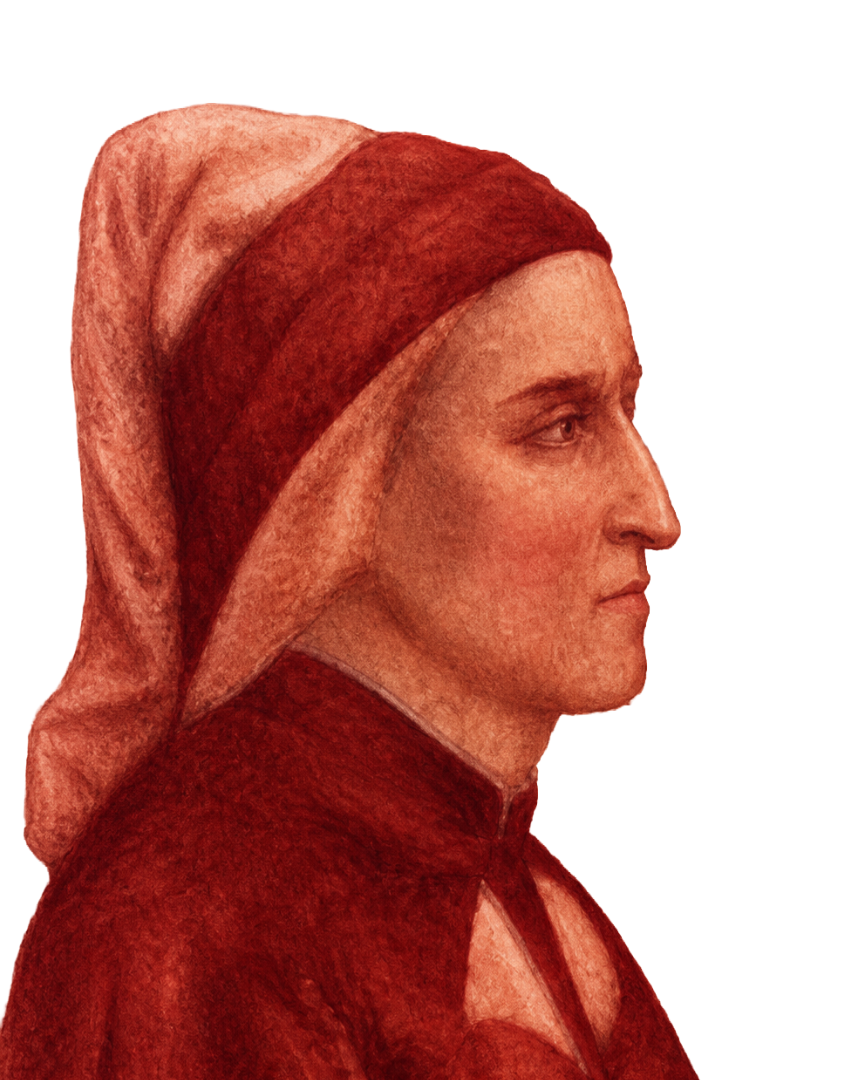
Dante Alighieri (1265 – 1321) is considered one of the greatest poets of the European Middle Ages and is often called the "father of the Italian language." His life was intertwined with turbulent political events in his native Florence, with artistic searching, and with an inner spiritual journey that finds its fullest expression in his greatest work, the Comedy. In 1302 he was permanently banished from his home city and never returned to it.

His path led him through the cities of northern Italy and along the Adriatic — in constant search of protection, allies, and a new space for creation.
It was in exile that his most important work was created: the Comedy. A visionary poem about a journey through Hell, Purgatory, and Paradise, which at the same time reflects Dante's own personal journey in search of truth, justice, and meaning.

The loss of home became his greatest theme. Exile is not merely a political fact, but a profound human experience — the collapse of security and the beginning of an inner journey.
This is why Dante transcends time today. He became a symbol of humanity on a journey. A symbol of the search for identity, belonging, and meaning.
His legacy connects the European cultural space — including the Slovenian and Italian ones — as will be explored further.

If you'd like to know more about Dante as an exile and his vengeance, ask DANTE AI

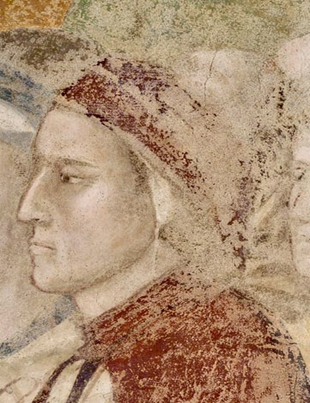
Profile bust of a young man wearing a red cap, Renaissance-style fresco (presumed to be Dante Alighieri, attributed to Giotto).

The oldest portrait of Dante Alighieri – Giotto's Paradise in the Chapel of St. Mary Magdalene

In the Bargello Museum in Florence, in the Chapel of St. Mary Magdalene, is Giotto's 14th-century fresco Paradise, in which the oldest portrait of Dante Alighieri has been preserved.

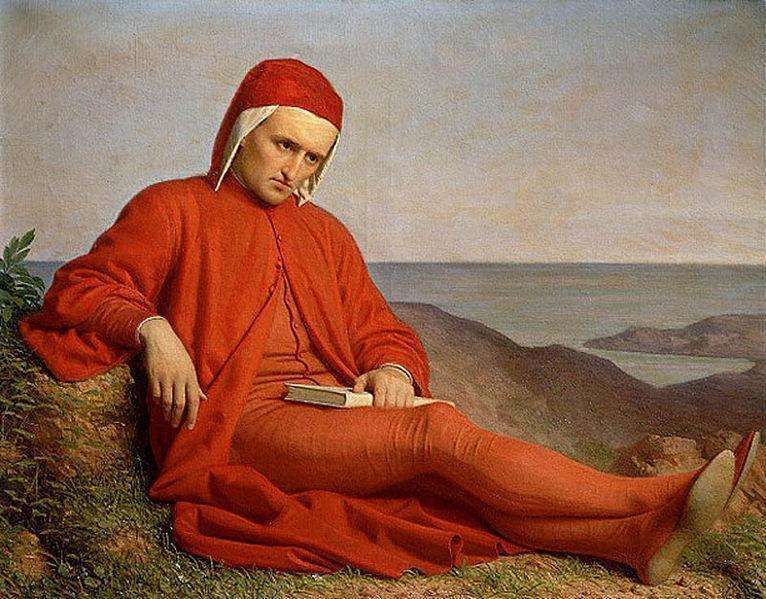
Man in a red medieval robe and cap sitting on a meadow by the sea, holding a book in his hand, with a hilly coastline in the background (portrait of Dante Alighieri).

Dante in exile

The painting Dante in Exile (Dante in esilio) by the Italian painter Domenico Peterlin (1850–1899) depicts Dante Alighieri seated on Dante's Rock near Duino.

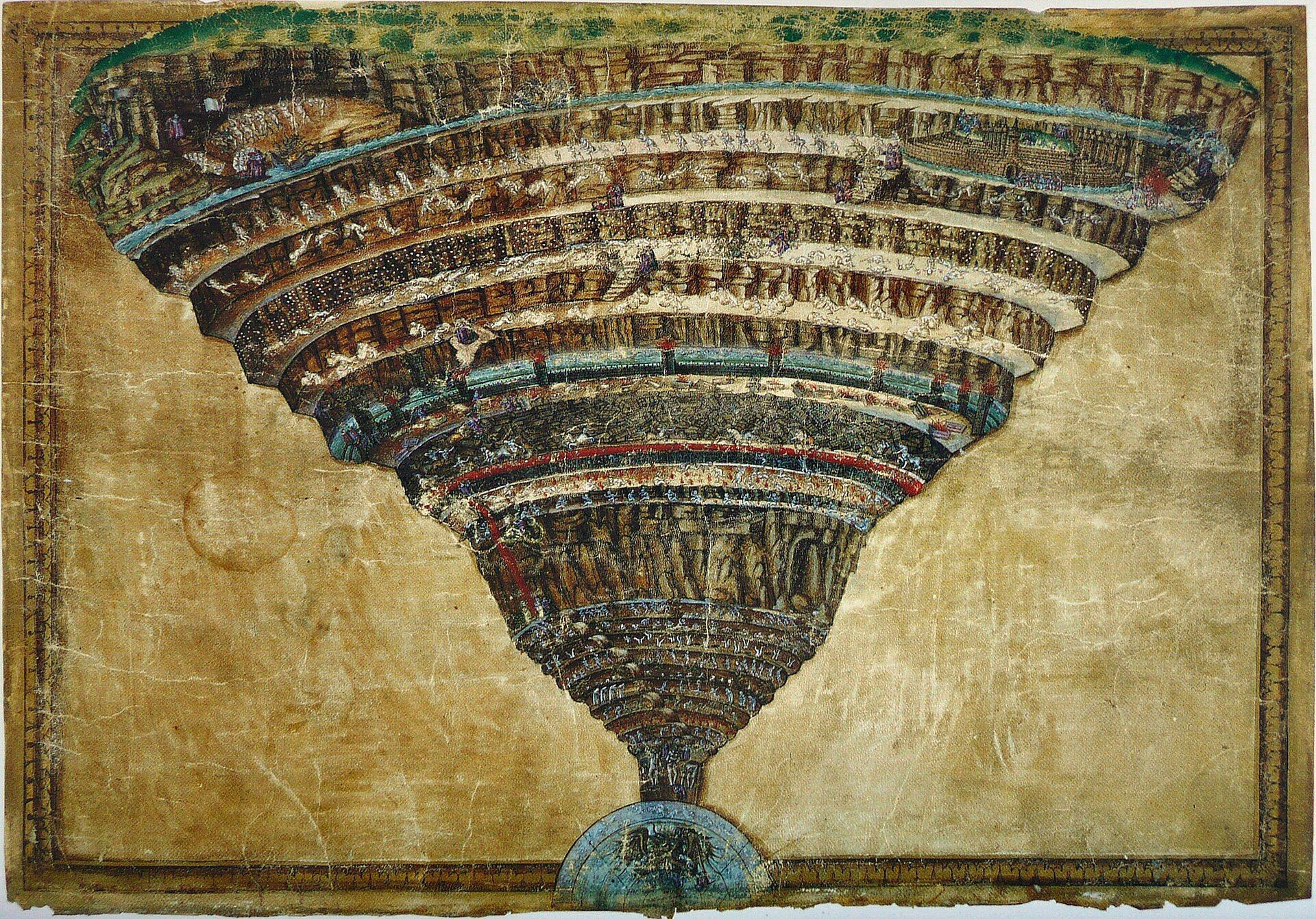
Illustration of Dante\'s Inferno depicted as an inverted cone with multiple concentric circles, each representing one of the hell\'s levels.

Botticelli's Map of Hell

Botticelli's "Map of Hell" (c. 1480–1495) is a topographical cross-section in the shape of a funnel: nine circles, the walled city of Dis, then the Malebolge with its ten trenches, and at the bottom the frozen Cocytus with Lucifer. The image serves as an orientational key to his manuscript cycle.

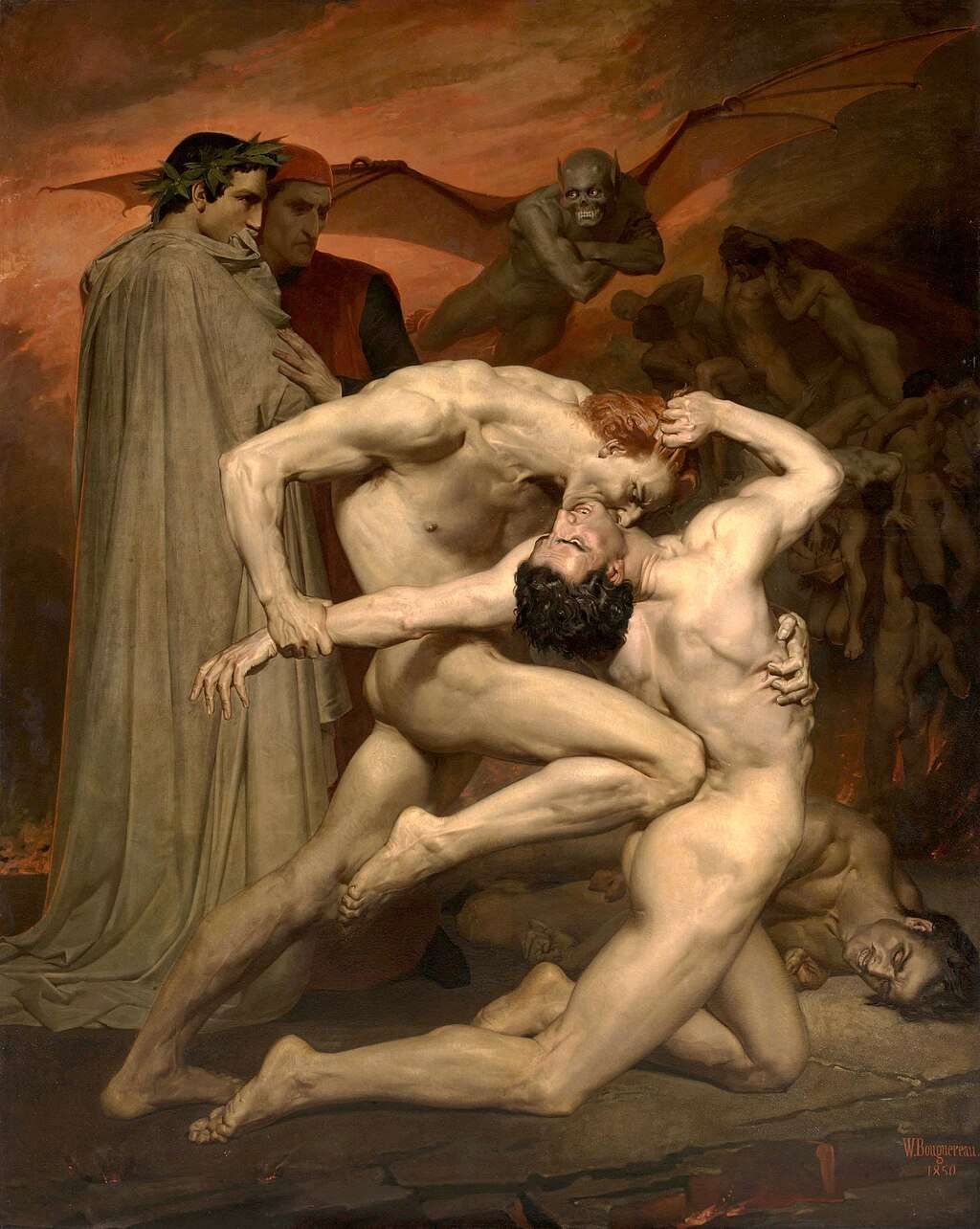
Painting depicting a scene from Dante\'s Inferno — two nude men grappling in a fiery setting, watched by Dante wearing a laurel wreath and Virgil in a red cap, with a demonic figure in the background.

Dante and Virgil in Hell

Dante and his guide Virgil on their journey through Hell, as described in the Comedy, painting by William-Adolphe Bouguereau (1850).

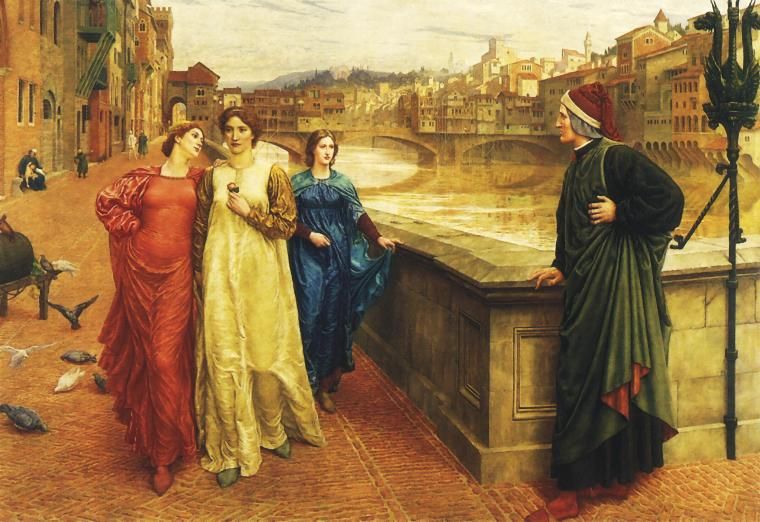
Painting of four figures by a bridge over a river, with a city skyline in the background — three women in colourful dresses and a man in a dark green robe and cap (scene from Florence, Dante and Beatrice).

Dante and Beatrice in Florence

The artistic depiction shows Dante meeting Beatrice and her companions in the urban setting of Florence, reflecting a key motif of his literary and romantic legacy.

Back